Fashion Design (Co-op)
Image

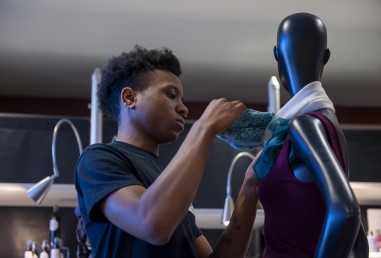
The Fashion Design program at Fanshawe blends design, technology and sustainable craftsmanship, preparing students for a range of career options in the fashion industry. Operating as a real-world incubator, this dynamic program builds your creative adaptability and design-thinking mindset, equipping you to lead tomorrow's market.
Develop core transferrable skills in design analysis, apparel manufacturing and technology, and design communications and marketing.
Computer-aided design (CAD) and applied technology are also woven throughout the curriculum, fostering your independent problem-solving abilities for a rapidly changing industry.
The learning experience in this program extends beyond the classroom through hands-on lab work, field trips, practical research opportunities, and optional co-op work-term experiences.
Your final year of study culminates in a major capstone project where you will ideate, produce, and present a final collection. You’ll graduate with a high-impact, multi-platform portfolio, featuring digital lookbooks, web showcases, and technical product blueprints from projects throughout the program.
Whether you aim to join a design firm, launch your own fashion line, or bring new ideas to life as a creative entrepreneur, this program will give you the skills and network to define the future of the fashion and apparel industry.
The Fashion Design program offers a cooperative education component, which provides students the opportunity to gain invaluable first-hand workplace experience in their chosen field. Here are some co-op jobs that have kick-started the careers of some Fashion Design students before even graduating!
Assistant Designer
Aide in the creation of an apparel line through illustration, cutting, stitching and pattern tracing.
Production Assistant
Assist in the quality control and efficient production of products.
Sewer/Tailor
Custom garments according to client needs. Repurpose something vintage, or simply alter a piece for continued wear.
For more information regarding co-op, please check out our co-op site or contact the Co-op Office at coop@fanshawec.ca to connect with a consultant.
Graduates of Fanshawe’s Fashion Design program are well-prepared for careers in a variety of fashion-related industries. Graduates typically find employment as:
Did you know Fanshawe consistently ranks high in graduation employment rates among large colleges in Ontario?
Here are some examples of career opportunities for graduates of Fanshawe’s Fashion Design program:
Technical Designer
Set up, maintain and update style summaries, create technical sketches for design, track and relate all changes and modifications from fit meetings to suppliers.
Fashion Designer
Manufacture, produce, market and sell streetwear.
Seamstress – Bridal and Special Occasion Wear
Complete flawless alterations including hems, bustles and custom requests.
| Year | Fall | Winter | Summer |
|---|---|---|---|
| Year 1 | Level 1 | Level 2 | *Co-op (see below) |
| Year 2 | Level 3 | Level 4 | *Co-op (see below) |
| Year 3 | Level 5 | Level 6 | *Co-op (see below) |
* Two co-op terms in the summer (May to August) after Year 1, 2 or 3.

This program is accredited by Co-operative Education and Work Integrated Learning Canada. This accreditation represents the highest standard of achievement for co-operative education programs in Canada, and recognizes Fanshawe's commitment to excellence.
The graduate has reliably demonstrated the ability to
Karen Harley
| Test | Score |
|---|---|
| TOEFL iBT | Overall score of 4.5 with no score less than 4 in any band |
| IELTS Academic | Overall score of 6.0 with no score less than 5.5 in any of the four bands |
| CAEL | Overall score of 60 with no score less than 50 in any of the four bands. score of 80 in listening |
| PTE Academic | Minimum score of 53 with no score less than 45 in any of the four bands |
| Cambridge English | Overall score of 169 with no language skill less than 162 |
| ESL4/GAP5 | Minimum grade of 80% in Level 8, 75% in Level 9, or 70% in Level 10 |
| Duolingo | Overall score of 105, with no score lower than 95 |
| LanguageCert Academic | Overall score of 65 with no score less than 60 in any of the four skills |
| Level 1 | ||||
| WRIT-1036 | Reason & Writing 1-Art & Design | 3 | ||
| This course introduces students to essential principles of reading, writing, and reasoning at the postsecondary level. Students will identify, summarize, analyze, and evaluate multiple short readings and write persuasive response essays to develop their vocabulary, comprehension, grammar, and critical thinking. | ||||
| DRAF-1057 | Pattern Making 1 | 3 | ||
| Students will be introduced to the fundamental skills of patternmaking for apparel. Drafting basic blocks for pants and skirts will be followed by the main principles of flat patterning; dart manipulation, contouring and adding fullness. Concepts of ease, silhouette and body dimensions will be introduced to provide a solid base for further learning in flat pattern development. Students will work to develop blocks to standard sizes, interpret designs into flat patterns and create cohesive pattern sets that function as a complete garment through a variety of in-class exercises/drafts and practical assignments. Exercises and assignments will explore pant and skirt silhouettes, pockets, closures, waistband and finishes specific to skirt/pant garments. | ||||
| ARTS-1024 | Fashion Drawing & Theory | 2 | ||
| This course introduces the student to the fundamental skills of fashion drawing for the fashion designer. These include the use of line, space shape, texture and colour. Further studies include the application of proportions, balance and movement to the fashion figure. Students will be introduced to a variety of medium to encourage their drawing skills. The students will become acquainted with the use of a designer croquis as a fashion drawing tool. Students will complete final fashion composition presented and mounted in a professional manner. | ||||
| DESG-1062 | Sample Room Production 1 | 3 | ||
| In this course student will build basic sewing and construction techniques used in the fashion industry. During the semester they will gain practical experience using industry standard industrial machines and equipment. Students develop familiarity with assembly methods through the construction of samples and sample garments, culminating with work on a final project. | ||||
| FASH-1003 | Design Studio 1 | 2 | ||
| An introduction to fashion design literacy, visual communication and engagement with sustainable design communities. Design Studio 1 explores the creative design process through the study of the elements and principles of design with a series of innovation workshops. Students will apply and practice the design process through the development of a fashion designer's inspiration sketchbook. Students will explore a variety of research methods, digital online platforms, 2D & 3D creative problem solving processes to express innovation in sustainable design. | ||||
| FASH-1005 | Fashion Industry Analysis | 2 | ||
| This course provides the students with an introduction to the principles in which the fashion world revolves; and the role of economic, sociological and psychological elements in the fashion cycle. The course includes an overview of the fashion industry focusing on design, product development, manufacturing, marketing and retailing. Students will research contemporary fashion designers and examine their roles and influences on current fashion trends. | ||||
[1] Total program costs are approximate and subject to change. They do not include additional fees such as the health and dental plan, bus pass, or general expenses. Learn more about ancillary and additional fees.